Chemical & Material
Polyaspartic Ester (PAE) Industry Research Report 2026
19 January 2026
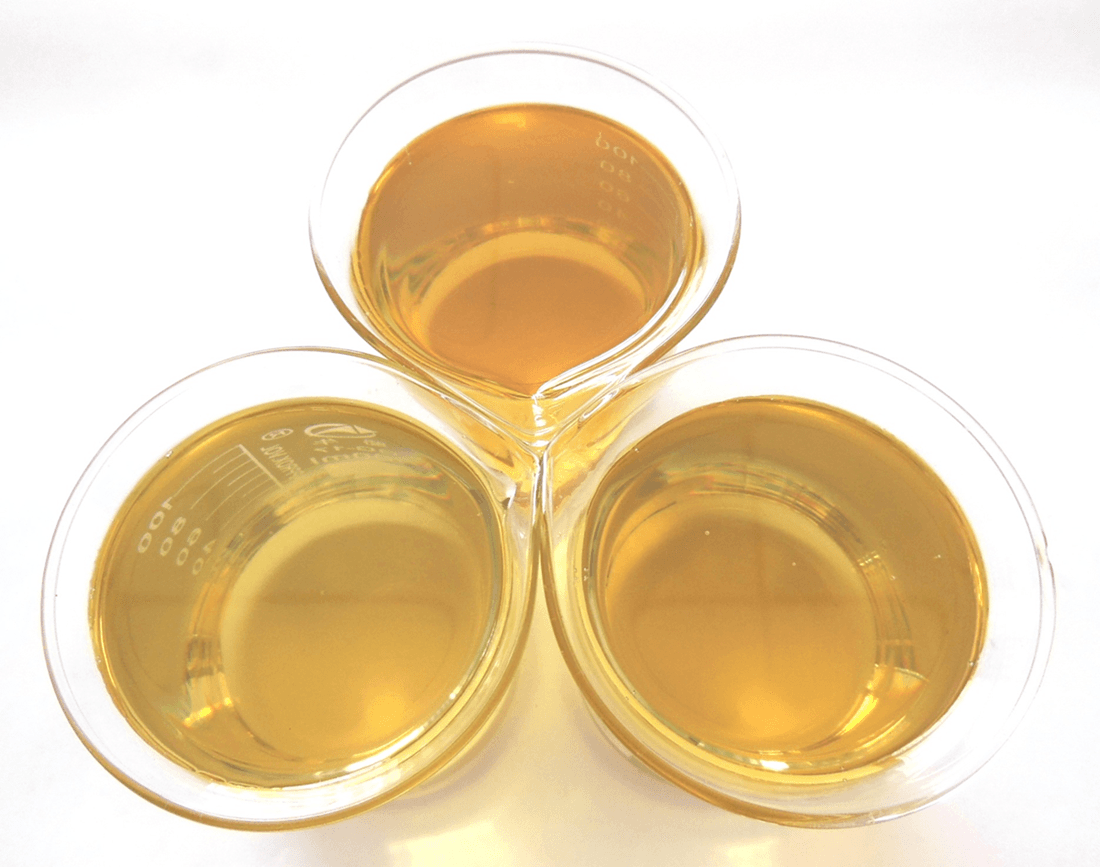
January 19, 2026—According to APO Research, Inc., the global polyaspartic ester (PAE) market in 2025 is in a “volume-led, price-stable” re-balancing. Market size is approximately USD 162.76 million, shipments 14,981 tons, and ASP USD 10,864/ton. Looking out to 2032, revenue and volume CAGRs are ~7.4% and ~6.4%, respectively, with growth driven by rising operating-condition density and willingness to pay for structured performance—rather than broad-based price inflation. Pricing is distinctly “two-track”: APAC—anchored by China, Southeast Asia, and India—sets volume and price anchors (China 2025 shipments ~4,896 t, ASP ≈ USD 8,593/t; Southeast Asia and India ~USD 7,925/8,398/t). North America and Europe run on the upper track at ~USD 12,660/12,283 per ton, jointly contributing over half of shipments and setting requirements for light-color appearance and compliance. Substantively, the transactional language is shifting from “resin nameplates” to “parameterized delivery”: tight drift of AHEW and 25 °C viscosity (SPC-controlled), stable %NCO with low free monomer, KF moisture and APHA color graded at release, 10–15-minute incoming re-verification at the customer, and acceptance criteria that explicitly include return-to-service time and VOC/weathering curves. Whoever can package these as evidentiary deliverables owns the upper-band pricing power.
Polyaspartic ester is a class of aliphatic “aspartate” functional resins—chemically β-amino ester adducts—used primarily as the amine component in fast-cure, high-solids polyurea or polyurethane coating systems, where they react with aliphatic polyisocyanates to form a dense, weatherable network with a controllable pot life compared with conventional rapid polyureas. Industrially, PAE resins are made by Michael addition of primary diamines (typically aliphatic or cycloaliphatic diamines that define backbone rigidity and reactivity) to dialkyl maleates or fumarates (the unsaturated diesters that define the “aspartate ester” motif), producing difunctional or multifunctional secondary-amino ester structures with tunable viscosity, amine value, and equivalent weight for precise NCO stoichiometry. Manufacturing is executed as a controlled addition reaction in stirred reactors with temperature management and stoichiometric control to drive near-complete conversion of the activated double bond, followed by polishing steps to meet coating-grade specs (e.g., residual monomer, water content, color, viscosity, and amine number), and then supplied as neat resin or formulated part of a two-component system designed around NCO-demand, cure profile, and film-property targets.
Aliphatic diamine–based PAE is the “throughput and thick-film” workhorse (2025: 7,757 t, ASP ≈ USD 9,992/t, 51.78% of volume), competing on the APAC efficiency track. Cycloaliphatic amine–based PAE raises the “top end” for topcoat appearance and weatherability (2025: 5,447 t, ~USD 11,342/t), with structural premium tied to contractually managed APHA ≤120, KF ≤200 ppm, and stable %NCO. Polyetheramine–based PAE supplies “low-temperature/thick-film/crack-bridging” redundancy (2025: 1,777 t, ~USD 13,208/t; 2025–2031 volume CAGR >10% and fastest), but requires SOPs such as “thin-pass builds + extended recoat interval + substrate pre-heat + dew-point margin ≥3 °C” to suppress endogenous CO? foaming. The cash engines by application remain industrial coatings and building materials. Industrial coatings in 2025 delivered 4,495 t, ASP ≈ USD 9,786/t, revenue ~USD 43.99 million; the optimal formulation logic is aliphatic-based as the backbone, directionally co-blended with 10–30% cycloaliphatic (to raise appearance/upper hardness) or 10–30% polyetheramine (to add low-temperature redundancy). Building materials in 2025 delivered 3,618 t, ASP ≈ USD 11,227/t, revenue ~USD 40.62 million, capturing TCO via “seal-prime + coupling + cycloaliphatic topcoat” on light-color mineral substrates. Infrastructure/energy equipment/transport each monetize differentiated clauses—service-life warranties, weather/chemical/turnaround triangles, and “minutes-to-open” partial operations—while niche scenes are addressed by “scenario families” of grades (AHEW/viscosity windows split by primer/intermediate/top, ethyl/butyl diester toggles, 10–30% structural co-blend matrix with HDI isocyanurate/H12MDI).
Industry pricing power concentrates with suppliers who close the loop from “chemical consistency” to “auditable delivery.” Covestro converts ~38.3% of shipments into ~55.3% of revenue at an ASP ≈ USD 15,683/t (~1.44× the global average). The essence is contractualizing light-color/low-free-monomer availability, AHEW/viscosity SPC, stable %NCO, temperature-controlled traceability, and a “return-to-service SLA + defect trigger-to-action” playbook. Upper-band challengers defend ~1.3× price levels in North America/Europe using the same documentation and at-receipt re-verification grammar. APAC efficiency anchors (regional leaders and the long tail) capture volume with “few-coat thick-film + overnight return” for intermediate/DTM, but without stable light-color, low free monomer, fast re-verification, and an engineering closed-loop for pinholes/blisters/early tack/thick-film cracking/gloss loss & chalking, they struggle to move up-band. Substitutes pressure only under specific clauses: epoxy + PU wins cost in bids that ignore return-to-service and VOC actuals; epoxy–siloxane and FEVE/fluoropolymer win on “appearance hold” at the extreme; thermal-spray pure polyurea wins at “extreme thickness/low temperature” via seconds-scale cure; waterborne/UV/MMA carve out points where “no NCO/low odor/’minutes-to-open’” dominate. Once acceptance converts to “return-to-service time + (single-pass DFT–recoat–dew-point) coupling + mix-ratio equation + weathering/chemical curves,” PAE’s integrated value turns directly into scores and unit price.
“Gold content” for entry and expansion must be proven by a three-in-one check of shipments, parameters, and compliance. Xiangyuan New Materials passed listing review in June 2023 with a plan to raise ~RMB 102 million for a 2,000 t/y DMD230 line, yet cumulative sales in 2016–2022 were ~11.47 t (only 16.25 kg in 2020–2022), and disclosures during inquiry indicated no PAE sales or order visibility for 2023–2025—textbook “paper capacity” risk. Without AHEW/viscosity release under Cp/Cpk ≥ 1.33, APHA/KF tiered gates, stable low-free-monomer %NCO, at-receipt 10–15-minute re-verification, and contractualized “return-to-service SLA + defect trigger–action,” an added 2,000 t is unlikely to translate into repeatable cash flow. By contrast, Aditya Birla’s acquisition of Cargill’s Dalton, GA plant and plan to lift total plant capacity from ~16 kt/y to >40 kt/y over two years (across epoxies, curing agents, reactive diluents, and polyaspartics, among others), combined with “U.S. domestic compliance + temperature-controlled logistics + near-site re-verification,” directly strengthens supply certainty and pricing power for the North American light-color topcoat band. For manufacturers, the first order of business is SPC on AHEW/viscosity, tiered release on KF/color/acid value, and locked-in low-free-monomer %NCO. For owners/EPCs, procurement should bake in acceptance of return-to-service time, linked records of single-pass wet-film thickness–recoat–dew-point, VOC actuals, weathering/chemical curves, and the mix-ratio identity B/A ≈ r×42/AHEW×100/%NCO. For governments, evaluation should shift from “resin names” to parameterized clauses on “throughput—service life—carbon footprint.” For investors, diligence should focus on “same-source/same-line batch proof with quarterly controls,” “AHEW/viscosity Cp/Cpk ≥ 1.33,” “tiered APHA/KF/acid-value release,” and whether “return-to-service SLA + defect closed-loop” is contracted. Execute these, and a supplier naturally rides the “APAC anchor + Western upper band” dual-track growth; fail, and larger nameplate capacity simply magnifies risk.
This report covers 2020–2024 as the historical period and 2025–2031 as the forecast, spanning global and China PAE markets. Scope includes three chemistries (aliphatic diamine, cycloaliphatic amine, polyetheramine) and six applications (industrial coatings, building materials, infrastructure, energy equipment, transportation, and others), with seven regional splits (North America, Europe, China, Japan, Southeast Asia, India, and Rest of World) by volume, ASP, and revenue. Methodologically, a “top-down (macro and demand baseload) × bottom-up (supplier and project samples)” dual calibration is used: company disclosures and channel interviews, tendering and customs data, and lab re-verification curves with parameterized release records are cross-validated. All monetary figures are USD; unless otherwise stated, values are in current-period nominal terms.
PAE is a secondary-amine prepolymer/oligomer formed via aza-Michael addition of primary amines to dialkyl maleates/fumarates. Industrial diesters are typically diethyl or dibutyl maleate (and the corresponding fumarates). Amines commonly include hexamethylenediamine, isophoronediamine, 4,4′-diaminodicyclohexylmethane, and polyetheramines. The resulting secondary amines carry sufficient steric hindrance to pair with low-free-monomer aliphatic polyisocyanate prepolymers or trimers (HDI, IPDI, H12MDI families), retaining high reactivity at high solids/low VOC while keeping pot life and gelation within a practical application window—avoiding pure-polyurea dependence on high-pressure plural-component rigs and ultra-narrow windows. Airless spray, roll, or brush can deliver single-pass thick films. The cured film is an aliphatic polyurea network with stable outdoor weatherability, gloss/color retention, chemical resistance, and mechanical durability, forming dense adhesion on steel, concrete, and composites with precise film-build control.
Backbone chemistry governs formulation and use. Aliphatic-diamine backbones emphasize hardness/wear and fast set but with modest low-temperature toughness; cycloaliphatic amines (e.g., IPDA, PACM) raise heat resistance, chemical resistance, and anti-yellowing; polyetheramine segments deliver toughness and low-temperature impact and suit thick or semi-elastic builds. Commercial grades are clear to pale liquids with typical 25 °C viscosities ~200–2,000 mPa·s and amine values ~150–300 mg KOH/g (AHEW roughly 160–300 g/eq). With low-free-monomer HDI/IPDI/H12MDI trimers, biurets, or urea-modified prepolymers, engineering stoichiometry generally targets near-equivalent NCO:NH with slight NCO excess—commonly 1.00–1.05—to balance crosslink density, defect risk, and long-term weathering. A single sentence secures the mix-ratio math: for resin AHEW = A (g/eq), hardener NCO mass fraction = P (%), and target equivalent ratio r, the required parts of hardener per 100 parts of resin (by weight) ≈ r×42×100/A×100/P (42 = g/eq of –NCO). Normalize to “neat resin” first, then re-express with pigments/fillers/solvents into volume-solids and PVC to prevent cross-system inconsistencies.
Synthesis commonly follows solvent-free or ultra-low-solvent routes, at 50–90 °C with mild basic catalysis to boost conversion, control viscosity, and suppress side reactions (DBU, TBD, or tertiary amines are typical kinetic tuners); uncatalyzed long holds can also work but challenge batch-to-batch color control and reproducibility. QC should prioritize amine value/AHEW, viscosity, color, moisture, and residual diester; IR (and optionally GPC) can track addition progress. Finished products are packaged/stored under dry inert gas to prevent moisture uptake and premature reaction with isocyanates; most grades carry 6–12-month shelf life at 5–30 °C per TDS. Matching aliphatic polyisocyanate prepolymers must provide stable %NCO, controlled viscosity, and ultra-low free monomer, with dry, light-protected, nitrogen-blanketed logistics; incoming QC focuses on %NCO, viscosity, free monomer, color, and moisture.
Formulation engineering balances window, appearance, and durability. Topcoats and decoratives lean on rutile TiO? for hiding, waxes and nano-silica for mar resistance, and HALS/UV absorbers for gloss/color retention. Direct-to-metal/intermediates choose anti-corrosive pigments (zinc phosphate, modified zinc, lamellar MIO) aligned to the protection mechanism while maintaining compatibility with amine-containing binders. Heavy-build floors balance density and shrinkage, typically with GCC and hollow microspheres, plus defoaming and moderated solvent-evaporation profiles to suppress CO? porosity. Rheology and solvent sequence set the application window: at 23 °C/50% RH, a 20–60-minute pot life, 0.5–2 h tack-free, 2–6 h recoat, and 5–7 days full cure are practical. Environmental control is decisive for defect suppression: substrate temperature ≥3 °C above dew point and RH ≤85% are recommended. Excess humidity or overly fast solvent loss triggers NCO–water side reaction and CO? release (pinholes/microbubbles); mitigation is a combined product/process solution—low-free-monomer prepolymers, moderated solvent-evaporation curves, optimized defoaming/water control, and reduced single-pass film builds.
System design must co-opt exposure class, surface preparation, and film-build. On steel prepared to ISO 8501-1 Sa 2?, single-coat 150–250 μm DFT DTM systems typically achieve 10–15-year design lives at ISO 12944 C3; at C4/C5, zinc-rich or epoxy primers plus PAE intermediate/top systems are standard for long-term protection. On concrete, use sealing primers to manage porosity/moisture, then quartz/sand build-coats for load, with PAE top layers delivering abrasion, stain resistance, and fast return. Mature, scaled scenes include wind-tower exteriors/interiors, bridges, rolling stock, energy-storage racks, and heavy-duty industrial floors—where single-pass thick films and fast return compress downtime and whole-life cost.
Quality and process control must run from raw to WIP to finished goods. On the resin side: amine value/AHEW, viscosity, moisture, and color as hard release gates, with IR for maleate conversion. On the hardener: %NCO, viscosity, and free monomer. On finished systems: record pot life, tack-free, recoat and full cure, density, and VOC; perform freeze–thaw, hot storage, and weathering/corrosion sampling—turning lab reproducibility into long-term customer confidence. Troubleshooting follows “environment → formulation → process”: pinholes/microbubbles usually mean humidity/substrate moisture or too-fast solvent—first correct environment and solvent curve, then reduce single-pass build; orange peel—check fan/atomization/reduction before rheology; back-tack—often thick-film residuals + low-T/high-RH—split coats and add induction; adhesion—usually prep/cleanliness or concrete moisture/alkalinity—return to prep and primer compatibility.
HSE and compliance must be designed in. Aliphatic isocyanates are skin/respiratory sensitizers—ensure ventilation and PPE; EU regulations mandate training and notification before use of diisocyanate-containing products. To meet VOC/HAPs constraints, choose high-solids/solvent-free systems, low-odor/low-HAPs solvents/additives, and low-free-monomer prepolymers. Sustainability routes include mass-balance and ISCC+ certified bio-content (e.g., PDI or castor derivatives) with clear accounting, and extending coating life to lower life-cycle emissions—replacing slogans with engineering evidence.
Cost and supply reflect the raw-materials basket and structural premia. On the resin side: diethyl/dibutyl maleate, HMDA, IPDA, PACM, and polyetheramines; on the hardener side: low-free-monomer aliphatic polyisocyanate prepolymers. Add energy/utilities, freight, and FX, and you get delivered costs; regional/application/type tiers then express structural premia. Supply hinges on low-free prepolymer availability, permitting/compliance, and maintenance ramps; demand on floor and heavy-anticorrosion penetration, wind/infra cadence, and project cash cycles. For mature manufacturers, sustainable premia come from windows that preserve long pot life under humid heat without sacrificing tack-free, process packages that keep density and adhesion at high-PVC DTM, and cross-season/cross-batch cure-curve consistency. For new entrants, fastest practical beachheads are fast-return floors and industrial maintenance DTM; to access wind towers/marine, they must present verifiable data and field support on color, yellowing, low-free monomer, weathering curves, and consistency.
PAE is not a single reactant but a tunable platform—chemistry, stoichiometry, and prepolymer pairing are co-adjustable. With unified metrology, explicit process windows, and rigorous QC, PAE delivers a stable blend of high-solids, fast return, and long-term weathering—a verifiable, auditable, and repeatable industrial pathway for manufacturers, applicators, and regulators alike.