Machinery & Equipment
Knife Gate Valves: Downtime-Risk Procurement, Upgrading Demand, 2032 Outlook
03 February 2026
According to the latest report from APO Research in 2026, In industrial procurement, knife gate valves sit in the category of downtime-sensitive isolation hardware for slurry, fiber-laden, powder, and other high-solids services, where a valve choice is ultimately a decision on clogging risk, abrasion life, and maintenance predictability rather than a generic piping commodity. In 2025 the global knife gate valves market delivered about US$0.70 billion; it is expected to reach about US$0.73 billion in 2026 and approach US$1.05 billion by 2032, the market is projected to grow at a CAGR of about 6% from 2026 to 2032. In unit terms, output was around 273 thousand valves in 2025 and is expected to be roughly 283 thousand in 2026, with gradual unit-value uplift as severe-service specifications and automation content become more prevalent.
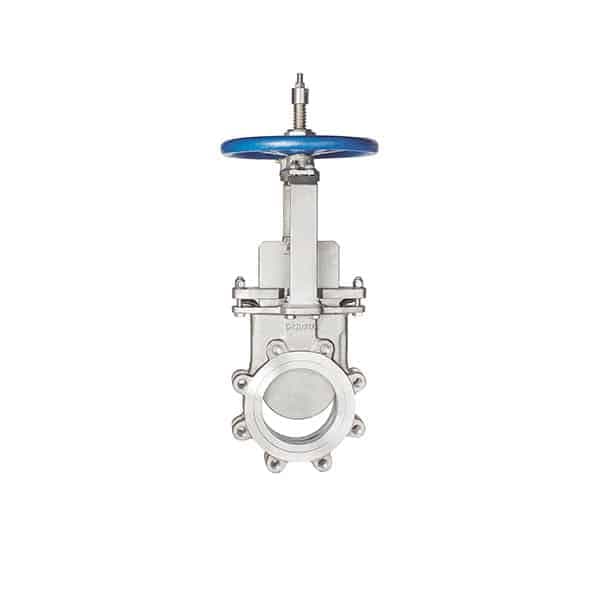
Knife gate valves are industrial isolation valves engineered for shutoff service in slurries, pulp stock, powders, chips, and other media containing suspended solids, where a sliding, knife-edged gate moves linearly through the flow path to shear and displace material and achieve closure with lower jamming risk than conventional wedge or parallel slide gates. The valve architecture typically comprises a one-piece or split body (wafer, lug, or flanged style) with a full-port throat, gate guides, a sharpened plate gate, a seat system (resilient elastomer seat, metal seat, or cartridge seat depending on sealing and abrasion demands), and a stuffing box with packing and gland follower; actuation is commonly manual (handwheel) or powered (pneumatic, electric, or hydraulic cylinder) via a rising or non-rising stem and yoke, with optional bonnet and purge/flush ports for severe services. Materials are selected around abrasion, corrosion, and solids loading: bodies are commonly ductile iron, carbon steel, or stainless steels; gates are typically stainless or hardened alloys with ground sealing faces and may use hardfacing or wear-resistant coatings; seats are elastomers (EPDM, NBR) or PTFE for tight shutoff, or metal for high temperature and erosive duty; packing is typically PTFE or graphite-based to manage leakage and cycling. Manufacturing is dominated by heavy casting or fabrication followed by precision machining of the body throat and seat pockets, grinding/finishing of gate surfaces, hardfacing or coating where specified, controlled assembly of guides, seat and packing systems, and end-of-line functional and pressure testing (commonly to knife-gate specific standards such as MSS SP-81 with leakage tests often referenced to general valve test practices), because real performance hinges on gate straightness, surface finish, alignment, and seat compression control under solids-laden conditions.
What practitioners pay for in knife gate valves is the ability to keep abrasive and high-solids isolation failures inside a controllable maintenance window. Buyers typically prioritize structural stiffness under differential pressure, gate and seat wear systems, packing-box integrity and flush provisions, and the way the open-close profile interacts with process stability; nominal size and pressure class alone rarely predict field performance. For manufacturers, consistency in machining and assembly tolerances, flatness, surface condition, and repeatable sealing behavior often determines real-life outcomes more than datasheet wording, especially when plants tighten availability targets and safety interlock requirements.
The 2025 demand mix is anchored by pulp and paper at roughly US$0.31 billion, contributing well over two-fifths of global value; mining at about US$0.12 billion, wastewater treatment close to US$0.10 billion, and chemical processing around US$0.08 billion form the rest of the core abrasion and solids-handling base. This mix explains why severe-service design themes wear-manageable seats, replaceable liners, predictable wear paths, and maintainable sealing architectures remain central to purchasing decisions, while actuation selection increasingly follows plant automation and EHS logic instead of purely initial capex.
Supply remains a combination of scaled global players and application-specialist long-tail brands. In 2025, AVK, DeZURIK, and Emerson Electric together accounted for about 46% of global value, with the top five near 57%; the top-tier concentration is projected to stay broadly similar in 2026. Large buyers tend to use a two-tier sourcing model: platform a small set of globally serviceable suppliers for critical process areas where uptime and spares commonality matter, while allowing qualified local suppliers for non-critical positions to balance lead time and total cost.
By the end of 2032, the most decision-relevant growth drivers are practical rather than abstract: sustained investment in slurry-intensive capacity and debottlenecking, continued upgrades tied to wastewater and solids-handling compliance, and a broader shift toward monitored, traceable valve assets integrated into plant reliability programs. The value shift is expected to favor manufacturers that can repeatedly prove sealing consistency and life in harsh media, deliver engineered actuation and accessory integration, and secure stable casting, machining, and critical material supply without compromising delivery discipline.