Chemical & Material
Aluminium Alloys for Aerospace Applications Market to Reach USD 12.38 Billion by 2031
07 February 2026
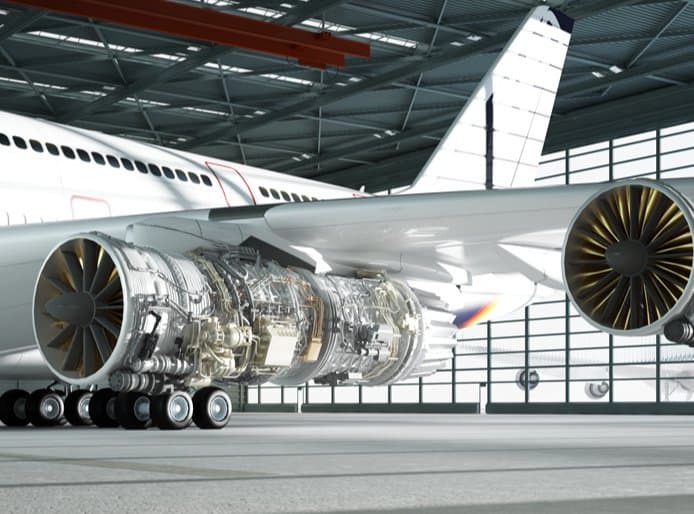
According to APO Research’s latest 2026 update, In 2025, the global aerospace aluminium alloys industry reached a production value of USD 6.23 billion, with total output rising to 649,297 metric tons, reflecting compound annual growth rates of 10.58% in value and 4.16% in volume between 2020 and 2024. The sector is entering a phase of accelerated expansion, with forecast revenue expected to grow at a 12.14% CAGR through 2031, reaching USD 12.38 billion by the end of the forecast period. This growth trajectory is supported by the recovery of commercial aerospace demand, steady expansion of space launch systems, and increasing adoption of advanced alloys, particularly aluminium–lithium (Al–Li) grades.
Aluminium alloys play a critical role in aerospace applications due to their unique combination of lightweight properties, high strength, corrosion resistance, and manufacturability. These materials are typically aluminium-based and alloyed with elements such as copper, magnesium, zinc, silicon, and lithium to enhance specific performance characteristics. Aerospace-grade aluminium alloys are mainly classified into wrought alloys and casting alloys. Among the wrought categories, the 2xxx series (aluminium–copper) and 7xxx series (aluminium–zinc–magnesium–copper) are widely used for primary structural components due to their excellent strength and fatigue resistance. The 6xxx series, although less prevalent in aerospace applications, offers moderate strength combined with good corrosion resistance and is sometimes used in secondary or internal structures. Advanced aluminium–lithium (Al–Li) alloys, developed over recent decades, provide reduced density and increased stiffness, making them well suited for modern fuselage panels, fuel tanks, and space-bound components. These alloys are selected not only for their mechanical properties but also for their behavior under cyclic loading, thermal variation, and environmental exposure, all of which are critical in aerospace operating environments.
To better understand their structural roles, it is useful to examine representative alloy grades and their typical applications. Specific aluminium alloys serve distinct functions based on their performance profiles. For example, 2024-T3 offers high fatigue resistance and is widely used in fuselage skins and wing surfaces, though it requires cladding due to limited corrosion resistance. 7075-T6 provides one of the highest strength levels among aluminium alloys and is commonly used in wing spars, landing gear components, and other high-load structures, despite its susceptibility to stress corrosion cracking. 7050-T7451 improves upon 7075 by offering enhanced corrosion resistance and is frequently used in military aircraft bulkheads and critical structural parts. For applications requiring good weldability and corrosion resistance, such as internal cabin components and fluid transport systems, 6061-T6 is widely adopted. In high-temperature and cryogenic environments, including spacecraft fuel tanks, alloys such as 2219 and Al–Li grades like 2195 and 8090 are preferred due to their favorable strength-to-weight ratios and thermal stability. Alloy selection is strongly influenced by structural requirements, environmental exposure, manufacturing processes, and lifecycle performance considerations.
As aerospace engineering continues to advance, aluminium alloys are evolving in parallel with manufacturing technologies. Friction stir welding (FSW) has become widely adopted for producing high-strength, defect-free joints in aluminium components, particularly in fuel tanks and space applications. Additive manufacturing (AM), while still under development for high-strength aluminium systems, shows promise for producing complex, lightweight components. Hybrid structural designs increasingly combine aluminium with carbon fiber composites or titanium to optimize overall weight and performance. At the same time, sustainability initiatives are driving increased interest in recycling aerospace-grade aluminium for both economic and environmental benefits. Despite the growing use of advanced composites and novel materials, aluminium remains a foundational material in aerospace structures due to its balanced performance profile, established supply chains, and cost effectiveness. Continued alloy innovation, especially in aluminium–lithium systems, ensures aluminium’s ongoing relevance in next-generation aircraft and spacecraft.
Aluminium alloys have remained foundational in aerospace engineering due to their superior combination of low density, high specific strength, excellent fatigue and corrosion resistance, good machinability, and cost efficiency. Structurally, aluminium alloys account for approximately 40–70% of the total airframe mass in modern aircraft. Aerospace-grade aluminium alloys are primarily divided into wrought and cast categories, with wrought alloys—particularly the 2xxx (Al–Cu) and 7xxx (Al–Zn–Mg–Cu) series—being dominant in major load-bearing structures such as wing spars, fuselage skins, and bulkheads. The 6xxx series (Al–Mg–Si), while less prevalent, is valued for its weldability and corrosion resistance in secondary structures. More recently, aluminium–lithium (Al–Li) alloys have gained traction due to their reduced density, increased stiffness, and improved damage tolerance, making them suitable for aerospace skins, stringers, floor beams, and cryogenic fuel tanks.
As aerospace components are exposed to increasingly complex operational loads and environments, alloy selection must consider not only strength but also lifecycle durability, weldability, residual stress, and anisotropy. The trade-offs among fatigue performance, corrosion resistance, and static strength are well illustrated by commonly used grades such as 2024-T3, 7075-T6, and 7050-T7451, each optimized for specific structural scenarios. These considerations are central to material decisions across both commercial and defense aerospace platforms.
The development of ultra-high-strength aluminium alloys—defined by yield strengths exceeding 500 MPa—has been a key factor in replacing heavier or more costly materials such as titanium. The 7xxx series remains the most widely used in this category. Originally developed for aerospace and defense applications, these alloys now form the structural backbone of modern airframes, with material shares reaching up to 80% in some military aircraft. Alloys such as 7055, 7150, and 7475 offer high yield strength; however, balancing strength with resistance to stress corrosion cracking remains a persistent challenge. This has driven the development of new tempers (e.g., T73, T76, T77) and the incorporation of trace alloying elements such as chromium, manganese, and zirconium to enhance corrosion resistance and fracture toughness. The evolution from T6 to T77 aging conditions reflects a broader trend toward improved toughness and corrosion resistance while retaining high strength.
From a processing standpoint, thermal treatment plays a decisive role. Heat-treatment sequences—including solution heat treatment, aging (peak aging, over-aging, retrogression and re-aging), and deformation-assisted processes—are used to control precipitate morphology and microstructural evolution. Grain boundary stability, precipitate dispersion, and shape control are critical for enhancing fatigue and corrosion performance. Advances in thermo-mechanical processing, such as combined hot deformation and high-temperature aging, have significantly improved damage tolerance and isotropy in thick-section aluminium components. Friction stir welding has become a standard joining technique for fuselage structures and cryogenic tanks, delivering high-integrity joints with minimal defects. Extrusion and rolled-plate manufacturing processes have also been optimized to reduce interface defects, extend fatigue life, and support large, integrated structural designs.
Alongside conventional processing methods, advanced manufacturing technologies are emerging to address increasing design complexity and flexibility requirements. Additive manufacturing—particularly powder bed fusion and directed energy deposition—is gradually becoming viable for high-performance aluminium components. Although conventional aluminium alloys present challenges in AM due to cracking and solidification behavior, AM-specific alloys such as Scalmalloy® (Al–Mg–Sc) and high-temperature aluminium systems have been developed to improve process stability and mechanical performance. Powder metallurgy routes and micro-alloying with scandium and zirconium enhance grain refinement, precipitation control, and weldability, positioning these materials as promising candidates for future structural applications. With ongoing advances in alloy design and process control, additive manufacturing is expected to complement traditional subtractive and deformation-based manufacturing routes in aerospace.
Globally, the aerospace aluminium alloy industry is led by companies such as Arconic, Constellium, Novelis, Kaiser Aluminum, AMAG, and Aleris, which have developed multiple generations of commercial aerospace alloys. These suppliers provide forged and rolled products for aircraft components including wing skins, spars, fuselage frames, and floor beams. Western manufacturers have progressed through four generations of aluminium alloy development, with current efforts focused on achieving ultra-high strength levels of 600–650 MPa while maintaining adequate damage tolerance and corrosion resistance. Advanced 7xxx series alloys such as 7056, 7065, and 7255, along with new 2xxx series grades like 2524 and 2624, demonstrate optimized balances of zinc, copper, and micro-alloying elements, as well as improved impurity control, extending fatigue life and service safety margins.
In parallel, national programs across Asia and other emerging economies are investing heavily in aerospace-grade aluminium alloy development, building vertically integrated value chains spanning mining, alloy design, and forming processes. While gaps remain in intellectual property, high-end equipment, and data-driven certification capabilities, several regions are rapidly narrowing these gaps through strategic partnerships, infrastructure investment, and AI-assisted materials engineering.
From a typological perspective, 7xxx series alloys (Al–Zn–Mg–Cu) remain the industry’s volume anchor, accounting for 254,524 tons in 2025 (approximately 39.2% of total output), driven by their dominance in wing structures and other high-load airframe components. However, aluminium–lithium alloys represent the fastest-growing segment, projected to expand at a 7.56% CAGR (2025–2031). In 2025, Al–Li output reached 102,654 tons, with a corresponding market value of USD 1.18 billion. These alloys are increasingly deployed in reusable launch vehicles and commercial fuselage panels due to their superior strength-to-weight ratio, cryogenic compatibility, and suitability for friction stir welding.
Regionally, North America leads production with 281,210 tons in 2025 and is expected to maintain its dominance through 2031, supported by facilities operated by Kaiser Aluminum, Arconic, and Constellium at Ravenswood and Trentwood. Europe follows with 186,413 tons, concentrated around Constellium Issoire, AMAG Ranshofen, and Novelis Koblenz. China, while still a secondary contributor, expanded output to 124,211 tons in 2025, driven by vertically integrated programs under COMAC and AVIC, with production led by Southwest Aluminium, Nanshan, and Northeast Light Alloy. The Asia-Pacific region, particularly Japan and China, is projected to outpace North America and Europe in production CAGR after 2025.
At the company level, Constellium, Novelis, Kaiser Aluminum, and Arconic together accounted for more than 57% of global production value in 2025. Constellium, supported by its proprietary Airware® Al–Li series, reported aerospace revenues of USD 1.11 billion in 2025 at an average price of USD 13,274 per ton. Kaiser Aluminum increased output to 122,673 tons in 2025, generating USD 906.9 million in value, and continues to supply critical extrusions and forgings to Boeing, Lockheed Martin, and NASA. Arconic maintained leadership in plate and Al–Li products, while AMAG Austria Metall AG recorded the highest relative growth among European producers, achieving USD 464.7 million in aerospace alloy revenue in 2025, representing a six-year CAGR of 16.2% from 2020.
From an application standpoint, fuselage skins and fuselage structures remain the largest consumption segments, together accounting for over 54% of global aluminium alloy demand by weight in 2025. Their combined market value is estimated at USD 3.64 billion, driven by sustained production rates of platforms such as the Airbus A320neo, A350, and Boeing 737 MAX. Girder components and fuel tanks represent the most dynamic growth segments, supported by increased adoption of next-generation Al–Li alloys in launch vehicles and space station modules. Fuel tank applications are projected to achieve a 12.9% CAGR through 2031 in value terms.
Global price trends indicate moderate stabilization following the post-COVID surge of 2022–2023. Average industry prices peaked at USD 10,066 per ton in 2022 before correcting to USD 9,589 per ton by 2025, reflecting a balance among LME price volatility, energy cost inflation, and alloying element expenses (notably lithium and scandium). Despite this normalization, leading suppliers such as Novelis and Constellium continue to command premiums above USD 11,000 per ton through differentiated quality, advanced width capability, and deep qualification portfolios.
The supply base remains geographically concentrated and certification-intensive. Fewer than 25 facilities globally are qualified to produce aerospace-grade plate and extrusion products, reflecting high certification barriers such as AMS, AS9100, and NADCAP. These constraints limit short-term flexibility and contribute to persistent lead-time volatility. While Chinese and Russian producers are advancing into higher-performance alloy segments, widespread adoption in Western aerospace programs remains limited by qualification gaps.
Sustainability considerations are increasingly influencing procurement decisions. OEMs are incorporating Scope 3 emissions into sourcing strategies, accelerating adoption of low-carbon aluminium and closed-loop recycling practices. AMAG, Novelis, and Constellium have initiated hydropower-based smelting and scrap reprocessing programs for certified aerospace inputs. However, recycled content in primary structural components remains below 10% due to stringent purity requirements.
In summary, the aerospace aluminium alloy sector is entering a new growth cycle shaped by structural recovery, technological transition, and supply-chain realignment. Demand will increasingly diverge across commercial aviation, defense aerospace, and space systems, each with distinct alloy specifications, process requirements, and qualification pathways. Suppliers capable of scaling certified capacity, expanding into aluminium–lithium and high-strength aluminium–copper systems, and aligning with emerging sustainability metrics will be best positioned to capture value in a supply-constrained, specification-driven market environment through 2031.