Electronics & Semiconductor
AI-Driven Parallel Optics Density Fuels Multi-Channel Fiber Connector Market to Nearly USD 1.18 Billion by 2032
06 February 2026
February 6, 2026—According to APO Research, the global Multi-Channel Fiber Optic Connectors market, measured on a manufacturing-level production value basis, stood at US$ 645.87 million in 2025 and is projected to reach US$ 710.32 million in 2026. By 2032, production value is expected to approach about US$ 1,176.37 million, implying a 2026–2032 CAGR of approximately 8.77%. The growth story is no longer “more fiber everywhere” in a generic sense; it is increasingly a density-and-specification cycle led by AI-era data center fabrics and parallel-optics migration, where higher channel-count mix and tighter insertion-loss and geometry tolerances sustain value even as automation and yield learning push unit manufacturing costs down.
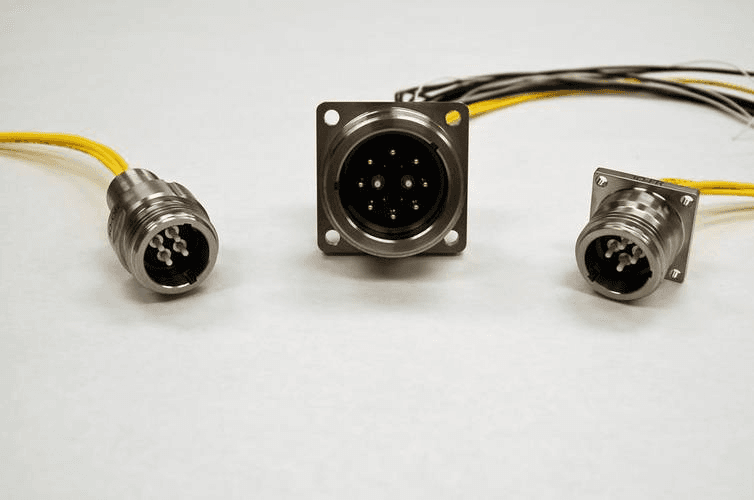
Multi-Channel Fiber Optic Connectors are precision-engineered optical interconnect components that terminate and mate multiple individual optical fibers in a single connector body to provide high-density, repeatable optical coupling between two fiber assemblies or between a cable and an opto-electronic module. They rely on a common mechanical alignment architecture—typically based on accurately machined guide features (such as guide pins and a ferrule/array block) and controlled end-face geometry—to maintain channel-to-channel positional accuracy, insertion loss stability, and low back reflection across repeated mate–demate cycles. In practical system terms, multi-channel connectors are used to reduce panel and module footprint, simplify routing and installation, and scale bandwidth by parallelizing optical lanes in applications such as data centers and high-performance computing, telecom and access networks, optical sensing and imaging instruments, and industrial or aerospace platforms where density, reliability, and serviceability of fiber interconnects are critical.
Supply expansion remains robust but is constrained by real manufacturing physics rather than nameplate capex alone. Global production capacity is estimated at about 52.0 million units in 2025 and about 58.0 million units in 2026, rising to approximately 97.3 million units by 2032 (implied 2026–2032 capacity CAGR about 9.01%). Output is estimated at about 51.5 million units in 2025 and about 57.3 million units in 2026, reaching roughly 94.8 million units by 2032 (implied 2026–2032 production CAGR about 8.75%). The modest and persistent gap between capacity and realized output is structurally consistent with a qualification-gated market: ramp speed is often limited by repeatable low-loss yield, endface geometry control, contamination discipline, and inspection throughput (notably interferometric inspection and automated polishing process stability), which collectively determine whether incremental demand converts into shippable volume without yield collapse.
Regionally, China remains the primary growth engine in production value terms, reflecting both demand pull from cloud and high-performance computing deployments and the depth of the local optical interconnect manufacturing ecosystem. China is estimated at US$ 283.61 million in 2025 and is projected at US$ 323.77 million in 2026, reaching about US$ 589.40 million by 2032 (2026–2032 CAGR about 10.50%). North America is estimated at US$ 148.74 million in 2025 and projected at US$ 158.83 million in 2026, reaching about US$ 242.40 million by 2032 (CAGR about 7.30%). Europe is estimated at US$ 71.11 million in 2025 and projected at US$ 77.28 million in 2026, reaching about US$ 121.28 million by 2032 (CAGR about 7.80%). Japan is estimated at US$ 93.13 million in 2025 and projected at US$ 98.59 million in 2026, reaching about US$ 145.49 million by 2032 (CAGR about 6.70%). ROW is estimated at US$ 49.28 million in 2025 and projected at US$ 51.85 million in 2026, reaching about US$ 77.81 million by 2032 (CAGR about 7.00%). The regional mix therefore continues to tilt toward China through 2032, while North America remains the second-largest value pool with a steadier, more mature slope.
By type, value concentration continues to move toward mid-to-high fiber-count formats as density economics dominate procurement decisions. In 2025, production value is estimated at US$ 66.91 million for 8-Channel, US$ 220.76 million for 12-Channel, US$ 259.71 million for 24-Channel, US$ 50.05 million for 48-Channel, and US$ 48.44 million for Other; in 2026 these are projected at US$ 72.88 million, US$ 239.80 million, US$ 290.46 million, US$ 55.26 million, and US$ 51.92 million, respectively. By 2032, these segments are expected to reach about US$ 112.94 million (8-Channel), US$ 383.17 million (12-Channel), US$ 511.04 million (24-Channel), US$ 93.57 million (48-Channel), and US$ 75.65 million (Other), implying 2026–2032 CAGRs of about 7.57%, 8.12%, 9.87%, 9.17%, and 6.47%, respectively. The portfolio signal is that 24-Channel remains the value anchor through 2032, while 48-Channel is the fastest strategic riser as port density, cable management, and deployment labor economics become more binding at scale.
By application, data centers remain the structural driver and the segment with the highest growth slope, while telecommunications remains a large, durable contributor and defense aerospace sustains a smaller but qualification-intensive pool. Data Centers are estimated at US$ 281.28 million in 2025 and are projected at US$ 309.28 million in 2026, reaching about US$ 533.13 million by 2032 (2026–2032 CAGR about 9.50%). Telecommunications are estimated at US$ 242.91 million in 2025 and are projected at US$ 274.57 million in 2026, reaching about US$ 447.95 million by 2032 (CAGR about 8.50%). Military Aerospace is estimated at US$ 97.14 million in 2025 and is projected at US$ 100.05 million in 2026, reaching about US$ 157.01 million by 2032 (CAGR about 7.80%). Others are estimated at US$ 24.54 million in 2025 and are projected at US$ 26.42 million in 2026, reaching about US$ 38.55 million by 2032 (CAGR about 6.50%). Across segments, competitive advantage increasingly accrues to suppliers that can industrialize low-loss performance at scale and sustain high yields under tight optical budgets, since hyperscaler-style qualification gates and process capability often matter more than nominal catalog breadth in determining who captures the incremental high-density ramps.