Chemical & Material
Diamantane vs. Adamantane: Structural Divergence Between a Catalog-Scale High-Purity Specialty and a Ton-Scale Intermediate Market
06 February 2026
February 6, 2026—According to APO Research’s latest 2026 report, diamantane (CAS 2292-79-7) and adamantane (CAS 281-23-2) are two independent markets with fundamentally different scale and industrial logic. The former is best characterized as a catalog-grade, specification-driven, ultra-small-volume high-purity specialty chemical, with demand primarily pulled by research use and high-end materials R&D. The latter is a ton-scale, grade-segmented industrial and fine-chemical intermediate market with clearer economies of scale and broader downstream extensibility.
On the diamantane side, global production-value output was approximately US$0.508 million in 2025 and is projected to reach about US$0.6976 million by 2030. Output volume is expected to rise from roughly 7.05 kg in 2025 to about 8.82 kg by 2030. Growth is driven less by physical volume expansion than by value uplift associated with higher purity grades, traceability, and compliant delivery capability. From a regional standpoint, North America, Japan, China, and Europe are the primary demand and value-contribution markets.
On the adamantane side, global production value was approximately US$209 million in 2025 and is projected to reach about US$263 million by 2030. Output volume is expected to increase from roughly 258.56 tons in 2025 to about 332.45 tons by 2030, following a more typical industrial chemical growth curve. Its pricing center is more strongly shaped by the mix between industrial-grade and high-purity grades, quality and compliance systems, and the ability to provide stable, long-term supply. By 2030, North America, China, Japan, and Europe are expected to remain the key value pools.
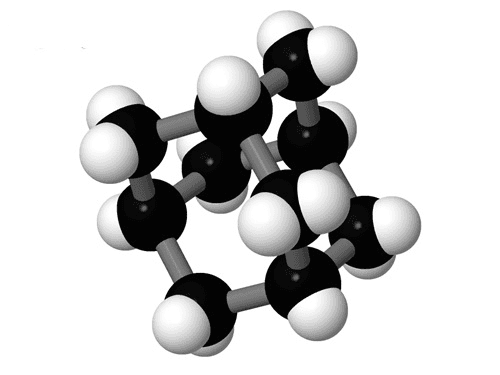
Diamantane (CAS 2292-79-7) is a member of the diamondoid family and is a fully saturated, all-sp³, three-dimensional cage hydrocarbon. Its carbon framework is composed of tetrahedrally coordinated carbon atoms, and its local connectivity is topologically analogous to that of the diamond lattice, resulting in low internal strain, high structural rigidity, and pronounced hydrophobicity. Its molecular formula is C₁₄H₂₀, and it can be viewed as a higher homologue extending the cage framework of adamantane. While preserving the high stability of a saturated cage skeleton, diamantane offers a larger steric volume and stronger conformational constraint, making it particularly suitable as a “hard-skeleton” motif in applications where thermal stability, chemical resistance, and controlled packing or interfacial behavior are valued.
Industrially, diamantane’s value does not lie in its role as a generic hydrocarbon feedstock, but rather in its function as a molecular platform for site-selective functionalization, enabling the design of high-performance polymer modification units, heat-resistant and low-migration additives, and fine-chemical intermediates requiring high steric hindrance and a stable hydrophobic cage. Its commercial supply chain is commonly linked to petrochemical polycyclic hydrocarbon streams, with market delivery achieved through a combination of framework construction, separation and purification, and targeted functionalization.
Adamantane (CAS 281-23-2) is the prototypical diamondoid molecule with the molecular formula C₁₀H₁₆, typically appearing as a colorless crystalline solid at ambient conditions. Its defining structural feature is a highly symmetric, low-strain three-dimensional cage, which yields a rigid “carbon cage” geometry rather than a conformationally flexible cyclic hydrocarbon. This framework restricts internal rotational freedom and imparts a stable steric shape, relatively high thermal stability, and hydrophobicity. As a result, adamantane has become a widely used scaffold in structure–property studies and molecular design, particularly because substituted derivatives can provide well-defined steric effects and a robust core skeleton.
From an industrial manufacturing perspective, adamantane is commonly produced from upstream petrochemical sources such as dicyclopentadiene (DCPD) enriched in C₅ fractions, followed by hydrogenation and precursor conditioning, and then skeletal rearrangement and isomerization over Lewis-acid or solid-acid catalysts to form the adamantane core. High-purity products are subsequently obtained via distillation and crystallization. Downstream uses broadly fall into two categories: one as a core scaffold for further derivatization in pharmaceuticals and fine chemicals, leveraging its stable hydrophobic cage and controllable substitution sites; the other as a rigid saturated structural unit or additive in materials chemistry, where it is used to improve thermal behavior, migration characteristics, and molecular packing.